A complete institutional digital asset platform with a full spectrum of services and tools across custody, tokenization, and digital cash
Request a demo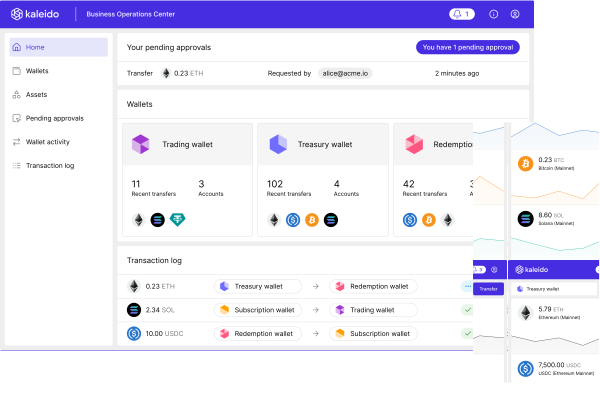


Kaleido's digital asset platform is one institutional platform for custody, tokenization and digital cash. It brings together Kaleido Custody, Tokenize and Digital Cash Hub on a shared policy engine and data model, so banks and asset managers run stablecoins, tokenized deposits, securities and real-world assets from a single foundation.
Asset tokenization software lets an institution create a digital token that represents an asset, such as a bond, a fund share or a bank deposit, and manage it through issuance, transfers, corporate actions and redemption. Kaleido's digital asset platform covers that full lifecycle and adds institutional custody and compliance, so each token and its controls live on one platform.
Kaleido's three digital asset products cover different needs. Kaleido Custody secures keys and wallets for any asset, Tokenize issues and manages tokens through their lifecycle, and Digital Cash Hub runs stablecoins and tokenized deposits for payments and treasury. All three share one platform, so you can start with one product and add the others later without re-integrating.
Kaleido's digital asset platform supports stablecoins, tokenized deposits, tokenized funds, CBDCs, digital securities, bonds and commodities. Institutions use it for cross-border payments, treasury management, trade finance, foreign exchange, remittance and digital money issuance. The platform imposes no fixed token schema, so new asset types fit without a rebuild.
Kaleido's digital asset platform correlates on-chain and off-chain data in a flexible data model, creating a single source of truth for every digital asset. Balances, ownership and transaction history from every chain sit in one record, so operations, finance and compliance teams all reconcile against the same data.
Kaleido's programmable policy engine, built on the Open Policy Agent standard, applies rules across jurisdictions, blockchain networks, business units and assets. Policies run before any transaction is signed, so a transfer that breaks a limit, fails screening or lacks the required approvals never reaches the chain.