Manage simple, complex, custom, and privacy-preserving tokens through the whole lifecycle.
Request a demo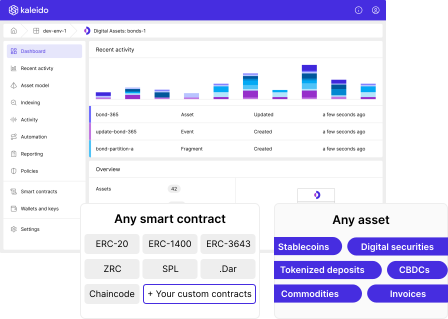
Digital assets shouldn't be locked to a single chain or standard. Kaleido Tokenize gives you a compliant and programmable asset engine built on a hardened stack, so your team ships faster without giving up control.




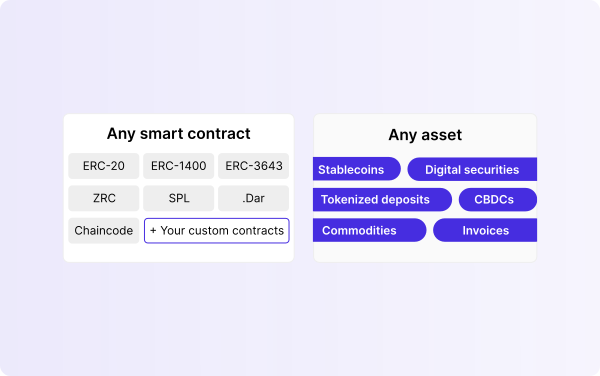


Kaleido Tokenize supports ERC-20, ERC-721 and ERC-1155 out of the box, along with ERC-3643 (T-REX) and the ERC-1400 family for permissioned securities. Beyond those standards, you can deploy any smart contract that compiles for the EVM, including your own escrow, swap or settlement logic. Upload the contract ABI and Kaleido generates a typed REST API for it.
Kaleido Tokenize handles stablecoins, tokenized deposits, bonds, equities, money market funds and private credit, as well as real-world assets like real estate. You choose whether each token is a digital twin of an off-chain record or the primary record of ownership itself. The platform imposes no fixed token schema, so novel asset types fit too.
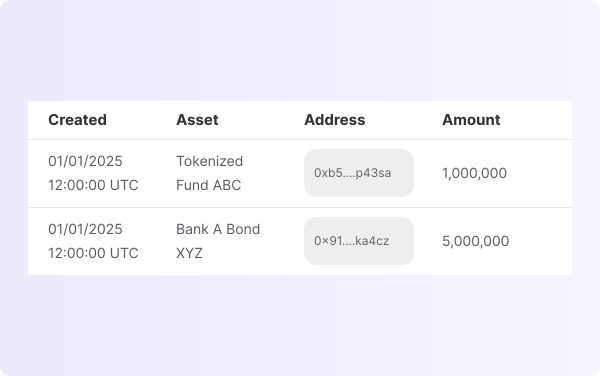
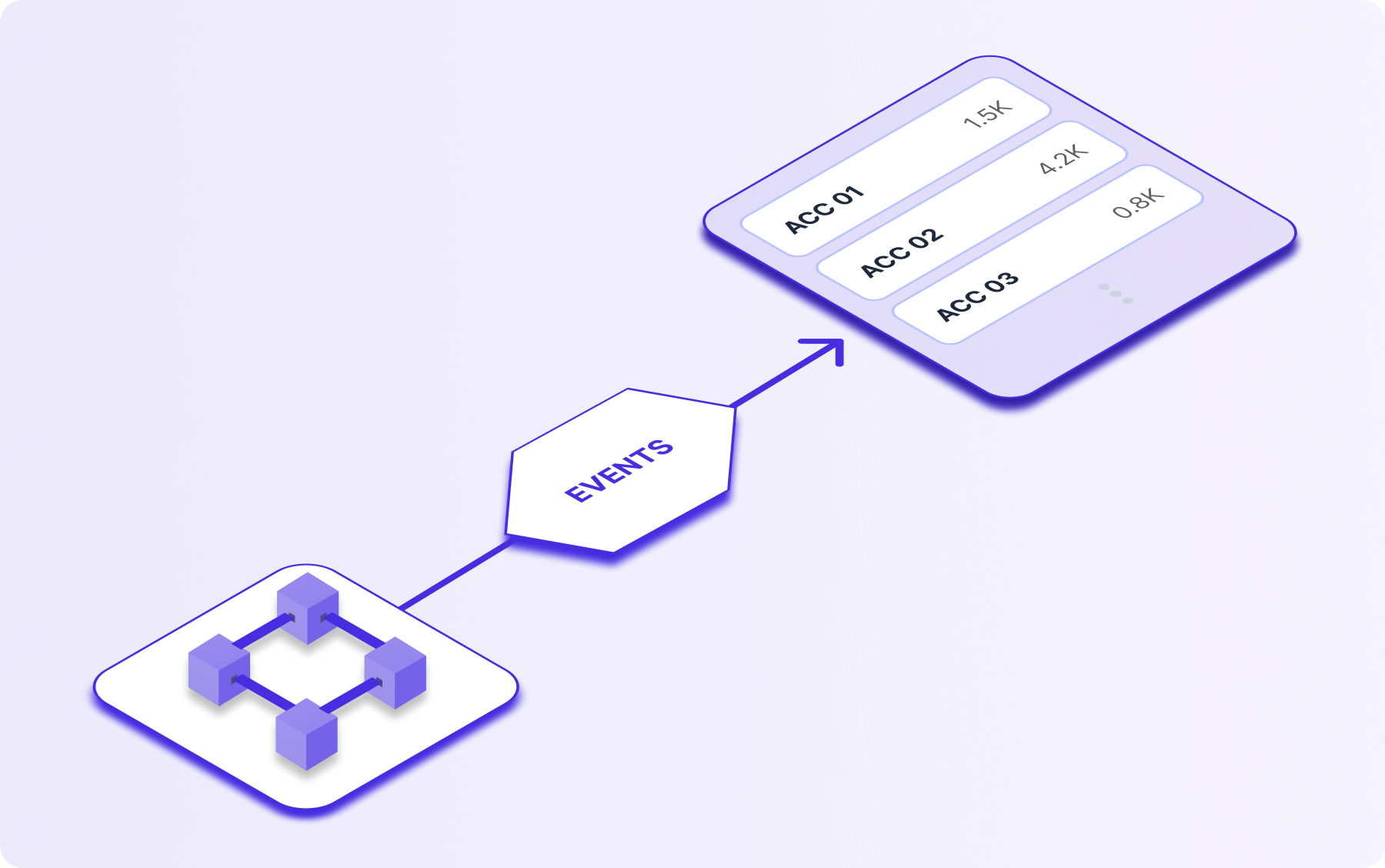
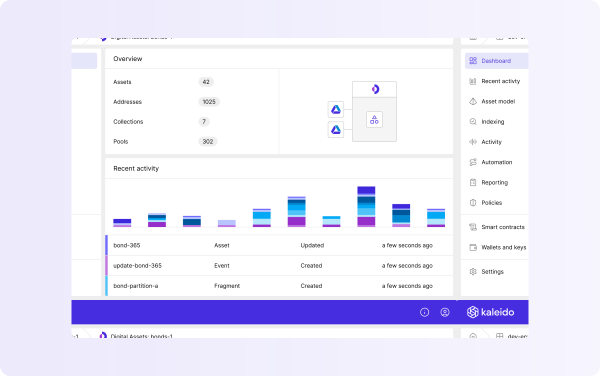
Kaleido Tokenize issues on Ethereum, Polygon, Arbitrum, Base, Avalanche and other EVM-compatible networks, or on a permissioned Besu network you run yourself. Tokenize indexes balances across every chain you use into one data model, so operations teams see a single view of each asset wherever it lives.
Yes. Your organization keeps full ownership of the smart contract code and IP you deploy through Kaleido Tokenize, and the built-in smart contract manager lets you customize your contracts to your requirements. Upgrades use standard proxy patterns (UUPS, Transparent, Beacon and Diamond), and policy controls govern who can approve an upgrade, so no single person can change a live contract alone.
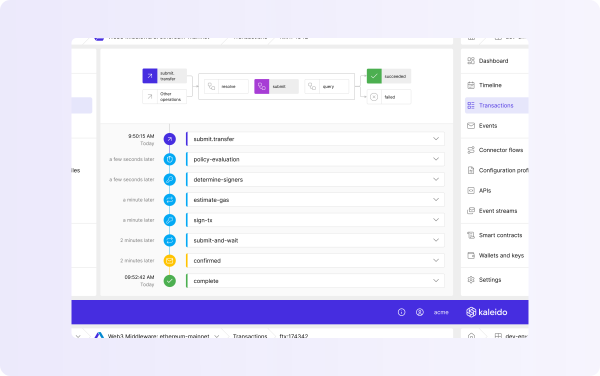
Kaleido Tokenize routes every mint, transfer and burn request through its workflow engine, which applies the approval steps and rules you define for that asset. Policies run before anything is signed and can check amounts, counterparties and screening results. The full activity history exports as an audit trail for your compliance team.
Yes. Kaleido Tokenize is fully integrated with Kaleido Custody and the rest of the Digital Assets platform. Tokens you issue land in custody wallets governed by the same policy engine, and FireFly handles the transaction and event orchestration underneath. Your team runs issuance and custody from one platform instead of stitching two vendors together.
Tokenizing an asset with Kaleido Tokenize takes three steps. First, define the token: pick a standard such as ERC-20 or ERC-3643, or upload your own contract, and set its mint, transfer and burn rules. Next, deploy it to the network you choose, and Kaleido generates the API your systems call. From then on, every issuance and transfer runs through your approval workflow, with balances indexed in real time.
Yes. Teams build custom tokenization platforms on Kaleido by combining their own smart contracts with Kaleido's workflow engine, indexing and custody, so they skip building that infrastructure from scratch. Kaleido exposes more than 500 platform APIs to build on. You keep your contract IP and data model while Kaleido runs the hardened stack underneath, as managed SaaS or on your own Kubernetes infrastructure.