Instantly tap into public networks with a full suite of tools on the most trusted platform for enterprise development. No crypto required.
Request a demo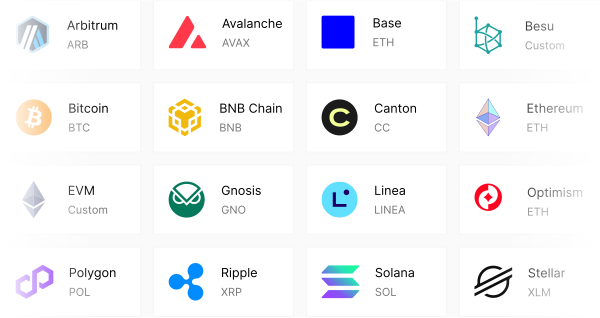
Direct participation in public permissionless networks often exposes enterprises to unacceptable volatility and security risks.
Kaleido eliminates these barriers by providing a hardened, SOC 2 Type 2 compliant gateway that abstracts the complexities of node operations, gas management, and key custody, allowing financial institutions to safely interact with DeFi protocols, tokenized assets, and public market infrastructure.


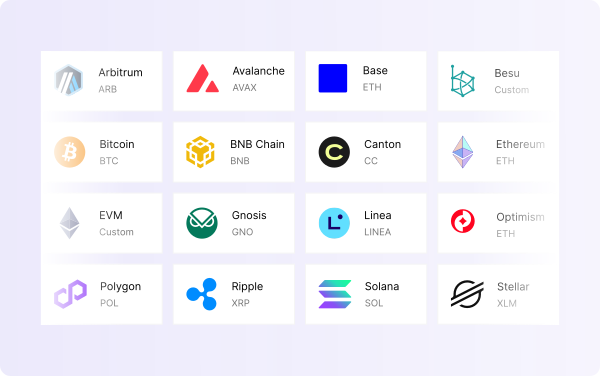


Kaleido connects enterprises to EVM networks such as Ethereum, Polygon, Arbitrum, Base and Avalanche through managed nodes, and to other EVM-compatible networks over JSON-RPC. Kaleido also supports non-EVM chains, including Stellar, Bitcoin, Solana and Canton. Every chain runs through the same platform, so the same platform controls, such as signing policies, approvals and audit trails, apply across networks.
Kaleido's managed gas station handles gas fees for you on networks that charge them. Automated top-ups and smart submission policies keep transactions moving, so your team avoids holding volatile crypto balances, forecasting gas prices or chasing transactions that stall because a wallet ran dry.
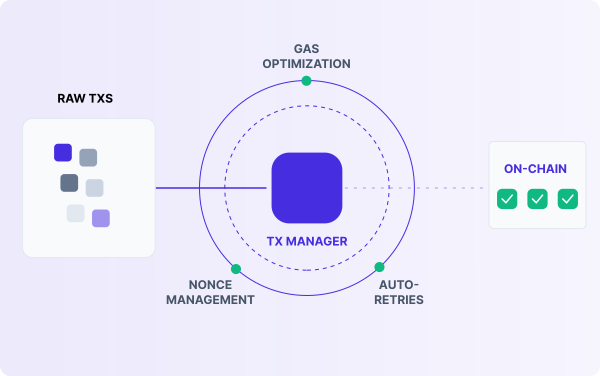
Kaleido's transaction orchestration handles stuck transactions automatically. It manages nonces, retries and gas pricing, so high-volume transactions on public chains confirm quickly and cost-effectively without manual intervention. Every step lands in an audit trail your compliance team and regulators can review.
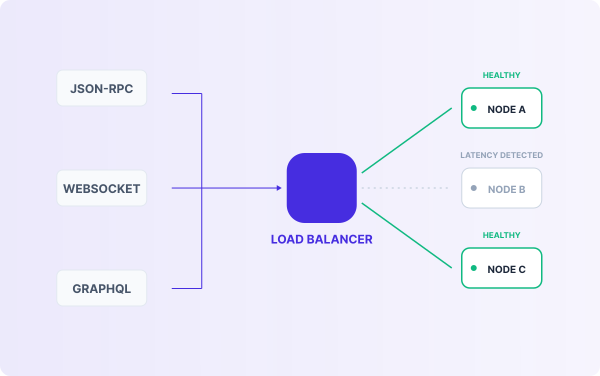
Yes. On EVM-compatible chains, Kaleido routes JSON-RPC, WebSocket and GraphQL requests across healthy nodes with automatic load balancing, so developers keep the libraries and tools they already use. Kaleido detects unhealthy nodes and reroutes traffic, and built-in metrics show query and transaction activity for each node.
Yes. Kaleido holds SOC 2 Type 2, ISO 27001, ISO 27017 and ISO 27018 certifications. Signing keys stay in the HSM or keystore you choose, and policies are checked before any transaction is signed, so public chain activity follows the same controls as the rest of your operations.
Kaleido secures public chain node access through its platform access management, which supports OAuth 2.0 and OIDC sign-in, role-based access control and mutual TLS. You decide which teams and applications can query a node or submit transactions, and node metrics show what each one is doing.
Running your own public chain nodes means your team owns node uptime, upgrades, gas funding, nonce management and key custody. Kaleido takes on that work with managed nodes, load-balanced routing and a managed gas station, while your keys and policies stay under your control. Your engineers spend their time on the application instead of the infrastructure.
Each public blockchain is designed for different tokenization needs. If you're looking for an EVM network, Ethereum is where token standards like ERC-20 and ERC-3643 originated, though its mainnet fees run higher than other options. Arbitrum and Base are Ethereum layer 2 networks that settle back to Ethereum at lower cost, Polygon is a low-fee EVM-compatible network, and Avalanche lets an institution launch its own custom chain with validators it chooses. If you're looking for non-EVM, popular options include Stellar, built for payments and asset issuance with issuer controls in the protocol itself, and Canton, which shares each transaction's data only with the parties involved. You can learn more on Kaleido's protocol pages or by getting in touch with the Kaleido team.